
Want to be better than last season? Let's make a plan
by Cyclops Marine 17 Mar 12:00 UTC
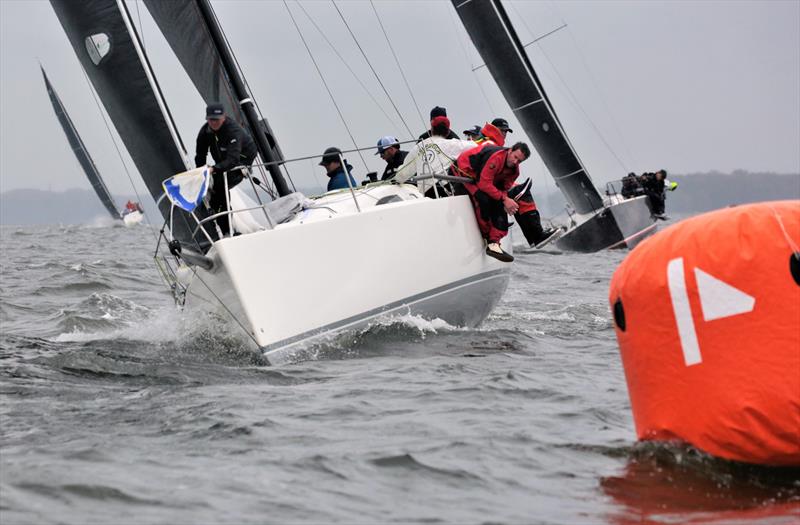
Cyclops Marine will help you make a plan to move up the fleet © Cyclops Marine
It's shaping up to be a big year. Maybe you're not aiming to win the 100th Fastnet or the Admiral's Cup, but whatever your goal, it should be doing a little better than last year.
Maybe that means beating your best-ever result or finally finishing ahead of that rival who always seems to pip you at the line. But to beat them, first, you need to beat yourself—and figure out what was holding the old you back.
Most sailors hit a performance plateau at some point. It's easy to believe there's a ceiling effect, that you've reached your limit.
But that ceiling? It's an illusion. Whether it's psychological or technical, there's always a way to squeeze out that last few percent. And when you take a closer look at the numbers, you'll see exactly where those marginal gains are hiding.
So, let's take a look at where we can find them...
Upwind: Fine-Tuning the Basics
When you break it down, sailing is simple...
 "Matching forestay tension to the wind and sails is the key to upwind performance"
Stu Bannatyne, four-time winner of the Volvo Ocean Race
"Matching forestay tension to the wind and sails is the key to upwind performance"
Stu Bannatyne, four-time winner of the Volvo Ocean Race
Performing upwind is about optimal sail shape, that is, the right amount of twist and depth in the sails for the conditions. You can try and judge this by sight/feel, but alongside the calibration of the primary soft controls, the sail shape heavily correlates with forestay load, so being able to hit known optimal sailing loads is a more precise and repeatable method.
For light conditions, lower load through the forestay will increase depth in the sails and maximise power. For heavier conditions, higher forestay load will provide flatter sails and less drag.
Either way, the key variable is the forestay load. This video featuring North Sails Expert Charlie Cumbley explains how to measure and optimise forestay load using smarttune wireless load sensors:
Downwind: Finding the Right Balance
Downwind is where things get more nuanced. Unlike upwind sailing, where forestay tension is the dominant factor, downwind sailing involves a wider variety of sails and different load management priorities.
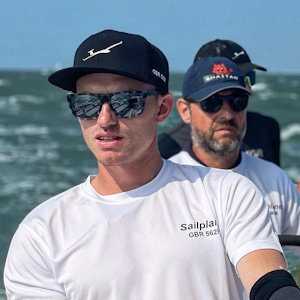 "Downwind you're using a variety of flying sails at a wide range of angles, so understanding the optimal load share ratio between the sail luff and cable at all times is crucial"
Cyclops Expert & Pro Sailor, Ben Hazeldine
"Downwind you're using a variety of flying sails at a wide range of angles, so understanding the optimal load share ratio between the sail luff and cable at all times is crucial"
Cyclops Expert & Pro Sailor, Ben Hazeldine
The best way to monitor and repeat this varies from boat to boat. With this in mind, optimising loading downwind requires a more versatile tool.
smartlink is a popular solution, as it can be used across various sails and running rigging installations to monitor key performance numbers and ensure loads do not exceed safe levels.
As well as smartlink, which is often used to monitor sail loads without being installed directly into sails, this has also led to the introduction of smartluff as an upgrade to the tack fitting exclusively in North Helix Sails.
By revealing precise sail loading, smartluff or smartlink can reveal the load share ratio by process of elimination.
In this video, North Sails Annapolis' Austin Powers explains how smartluff can be used in conjunction with smarttune to unlock optimal load sharing onboard Aerodyne 38 'Zuul':
In the Dark: Gaining at Night
If you are targeting a big offshore classic, adding speed during night passages can make a huge difference. But sailing in the dark presents its own challenges - without full visibility of the sails and rig, if you're equipped with load sensors, you can simply watch your onboard displays and keep hitting your targets, while staying safely within loading limits.
Putting it into practice
If you know what your critical performance loads are and you're equipped to monitor them accurately, the only thing left to do is to put it together on the water - hitting your fast numbers as much as possible.
If you have Cyclops sensors, they'll connect wirelessly to your boat displays and to the Cyclops app - providing live and logged load data. There are multiple ways you can put this to use:
- Practice using the sensors - take note when the boat feels fast and hit that ball-park figure again when you're racing.
- Get a little more scientific and match your numbers to polar charts, use the Cyclops app and/or your onboard instruments to log and refine your fast settings. Cyclops has produced a range of guides as a starting point.
- Use sailing analytics software, such as Njord Analytics, to analyse your performance. Hone in even closer on optimal performance and continually improvement.
Find the sensor for your boat or get in touch with a Cyclops expert for a consultation.