
The Ocean Race sailors help detect threats lurking in European waters
by The Ocean Race 8 Jun 11:15 UTC
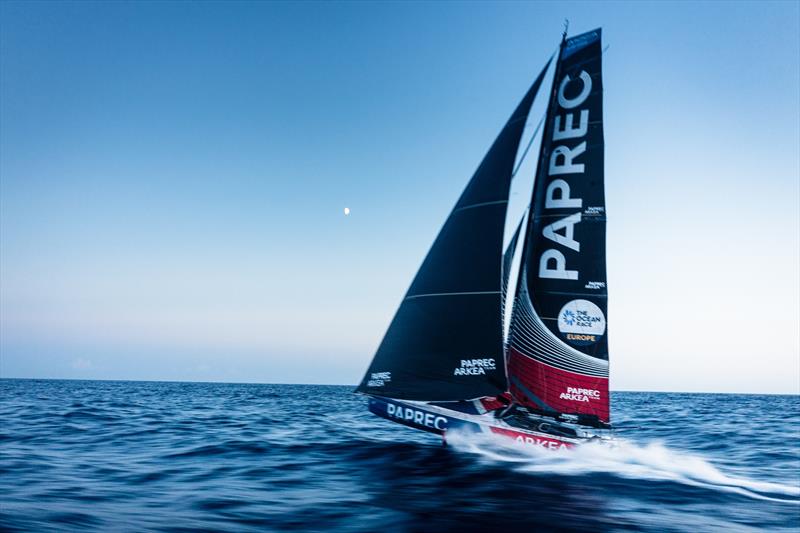
Leg 5 of The Ocean Race Europe 2025 onboard Team Paprec Arkéa © Julien Champolion / The Ocean Race
Seawater samples collected by sailors during The Ocean Race Europe 2025 could unlock new insights into ocean hazards, from algal blooms to jellyfish swarms.
It comes at a critical time, with shorelines across the Caribbean and beyond continuing to be swamped by sargassum seaweed, highlighting the urgent need to better understand ocean biodiversity and the spread of invasive species. The data collected during the Race could prove invaluable in assessing how these phenomena are being driven by climate change and human activity, and identifying the risks hiding in Europe's seas. The preliminary results are being released today to mark World Ocean Day, a global event that aims to raise awareness about the crucial role the ocean plays in sustaining life on Earth.
Team Paprec Arkéa collected environmental DNA (known as eDNA) as they raced through the Mediterranean across more than 2,000 nautical miles between Cartagena, Spain and Boka Bay, Montenegro, during last summer's competition. These samples contain the genetic material that organisms leave behind in the water through skin cells, mucus and waste. By analysing these traces, scientists from Citizens of the Sea were able to identify which species are present without needing to see or capture them. Results from the 24 samples found over 8.5 million DNA sequences and the detection of 2,365 types of bacteria and 785 plant and animal groups.
Among the most notable detections was the Mauve Stinger jellyfish, a species that is increasing due to climate change and overfishing. Most jellyfish monitoring happens close to shore, giving only a partial view of their movements, so samples collected offshore during the Race could prove invaluable in predicting future distribution and reducing the impact on tourism and fishing.
Species associated with harmful algal blooms (HABs), such as Alexandrium and Dinophysis were also found. While not indicating active blooms, their presence underlines the potential of eDNA as an early-warning tool, one that could be vital given that such blooms can produce dangerous toxins and cause harm to marine ecosystems, coastal economies, including fisheries, and human health. Traces of the invasive Red Sea plume seaweed were detected offshore, despite it being a coastal species, a finding that shows it may have spread further than previously thought. This could negatively impact Mediterranean seaweed forests by blocking out the sunlight, which leads to a decrease in biodiversity.
Other non-indigenous species commonly associated with shipping and marine infrastructure, including barnacles, reef-building worms, and colonial tunicates were also detected. These findings underline the role of maritime activity in spreading invasive species and demonstrate how eDNA can help track these movements across large ocean areas.
Stefan Raimund, The Ocean Race Science Programme Coordinator said: "Climate change and human activity are driving new marine threats, yet scientists know surprisingly little about many of the species and their movements. Sailing boats are what we call vessels of opportunity that can make a real difference when outfitted with the right equipment. They provide many benefits over traditional research methods as they provide the full spectrum of biodiversity more rapidly and at less cost. We want to equip many more racing boats to collect eDNA in real-time and help scientists gain a better understanding of species and their distribution in our seas, which is vital to the health of the ocean on which we all depend."
The Ocean Race is a pioneer of eDNA collection on sailing boats, with 11th Hour Racing Team, gathering data during a leg of the The Ocean Race 2022-23. The initiative is part of The Ocean Race's long-standing Science Programme, which harnesses the power of sport to advance ocean research, expand global observation efforts, and accelerate action for ocean health.