
Great Barrier Reef Health update - 19 March 2026
by Great Barrier Reef Marine Park Authority 19 Mar 06:28 UTC
19 March 2026
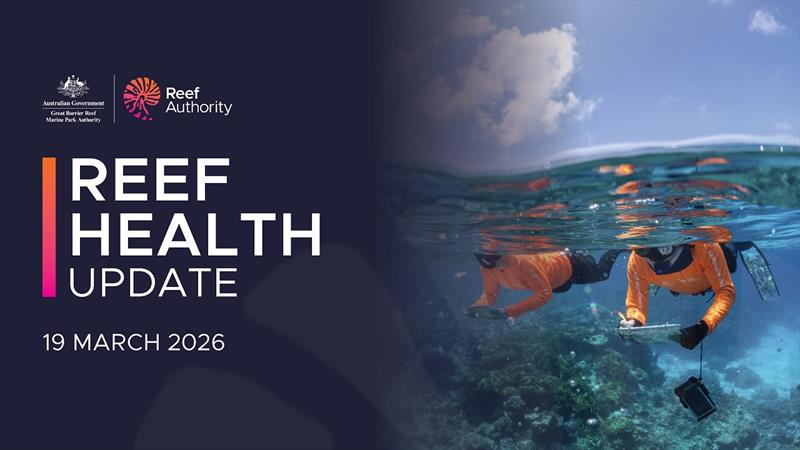
Reef health update – 19 March 2026 © Great Barrier Reef Marine Park Authority
As the lead managers of the Great Barrier Reef, the Reef Authority keeps an eye on the Reef year-round — with efforts stepped up over summer, a typically high-risk period from extreme weather.
The Reef Authority releases updates on the health of Reef which includes; sea surface temperatures, rainfall and floods, cyclones, crown-of-thorns starfish outbreaks, and coral disease.
These updates are based on forecasts, water temperature heat mapping, in-water surveys, citizen science and aerial surveys.
Reef health update | 19 March 2026
Tropical Cyclone Narelle (currently Category 5) has developed in the Coral Sea and is forecast to decrease to a Category 4 before crossing the Far Northern region of the Marine Park and making landfall on Friday. The system is expected to bring strong wind and wave action and heavy rainfall, which are likely to damage some reefs and increase the likelihood of freshwater runoff into the Marine Park.
Sea surface temperatures have eased slightly over the past week, particularly in the Northern region (between Innisfail and just above Cooktown), while remaining relatively stable elsewhere.
Encouragingly, coral bleaching alert levels have eased in recent days. The USA's National Oceanic and Atmospheric Administration (NOAA), which monitors ocean temperatures globally, has downgraded the Far Northern and Northern regions to bleaching watch status following a drop in sea surface temperatures. Most other areas of the Marine Park are expected to return to no heat stress conditions.
Temperature
Temperatures are still slightly above the long-term monthly average for March across the Marine Park. The Far Northern (between Cape York and north of Cooktown) region is around 0.6°C above average, the Northern region (between Innisfail and just above Cooktown) around 1.1°C above average, and the Central (between Mackay and Innisfail) and Southern (between Bundaberg and Mackay) regions are around 1°C above average.
Despite recent decreases in sea surface temperatures, some reefs in the Far Northern and Northern regions have accumulated exposure to heat stress that can cause some coral species to bleach.
The most likely outlook from NOAA's four-month forecast suggests heat stress will remain low to moderate across the Marine Park into winter.
Rainfall
From 9-15 March, heavy rainfall occurred in parts of the Burnett-Mary, Wet Tropics and Fitzroy catchments.
Weekly totals ranged from 300-400mm in some areas, with several locations receiving more than 200mm in a single day. Rainfall in the Burnett-Mary catchment is among the highest on record for this time of year.
Flooding has been reported in the Burnett River, and flood warnings remain in place across affected catchments. These conditions may lead to freshwater runoff into the Marine Park, which will continue to be monitored.
Reef health
Over the past week, 139 Reef Health Impact Surveys were completed across 19 reefs in the Far Northern, Northern and Central regions.
In the Far Northern region, most surveyed reefs showed no to low coral bleaching, with a small number recording low to medium levels (1-30%), and no fully bleached coral or mortality observed.
Coral bleaching in the Northern region varied, from moderate to very high (11-90%). Of the six reefs surveyed, four showed moderate to very high levels of coral bleaching. On these reefs, some corals were fully bleached, and two reefs also recorded small areas of coral mortality. These impacts are likely linked to a combination of exposure to recent heat stress and floodwaters.
In the Central region, one reef recorded low levels of bleaching, with no fully bleached coral or mortality.
Additional observations from Eye on the Reef monitoring programs reported coral bleaching on 9 of the 22 reefs surveyed. Coral damage was recorded on 12 reefs and coral disease on seven reefs.
Crown-of-thorns starfish control
The Crown-of-thorns Starfish Control Program continues to manage ongoing outbreaks across the Marine Park, with updates shared in the first weekly Reef Health Update of each month.
Our response and ongoing work
In the coming weeks, Reef Authority and Queensland Parks and Wildlife Service will carry out targeted surveys in areas affected by recent heat stress and Tropical Cyclone Narelle, to better understand impacts on reef health.
Marine Monitoring Program teams and partners are also sampling water quality and tracking floodwaters in the Cape York catchment, pending safe access. Satellite imagery will be used to assess flood plume impacts in the coming weeks.
The Reef Authority continues to work closely with the Reef Joint Field Management Program, the Crown-of-thorns Starfish Control Program, researchers, tourism operators, contractors and partners to ensure decisions are guided by the latest data.
Management actions remain focused on supporting Reef resilience, including enforcing zoning rules and encouraging responsible use of the Marine Park.